In The News
Palm Coast Observer
SPECTRUM NEWS 13
Flagler Focus
WFTV 9
WNDB
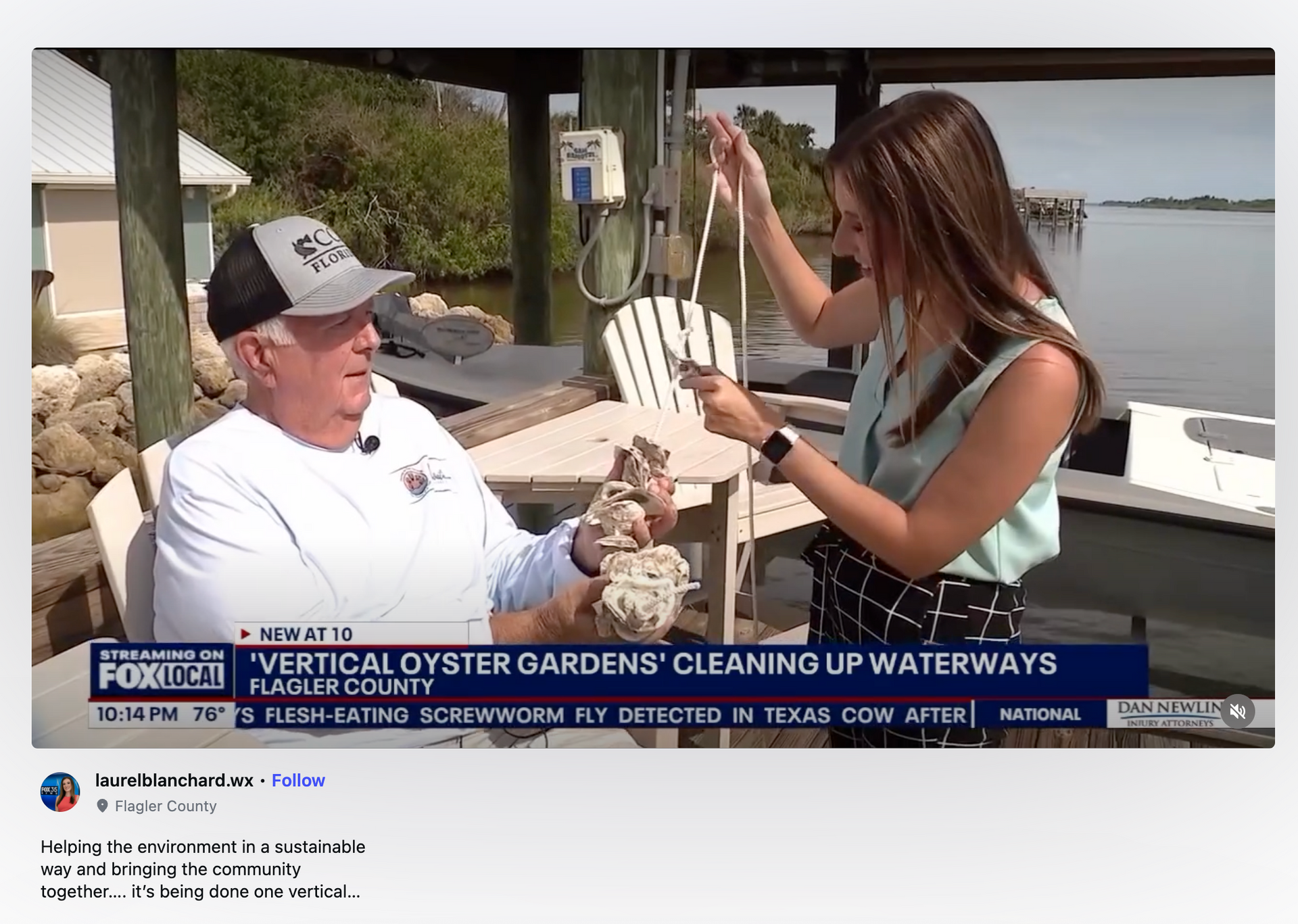
FOX Local
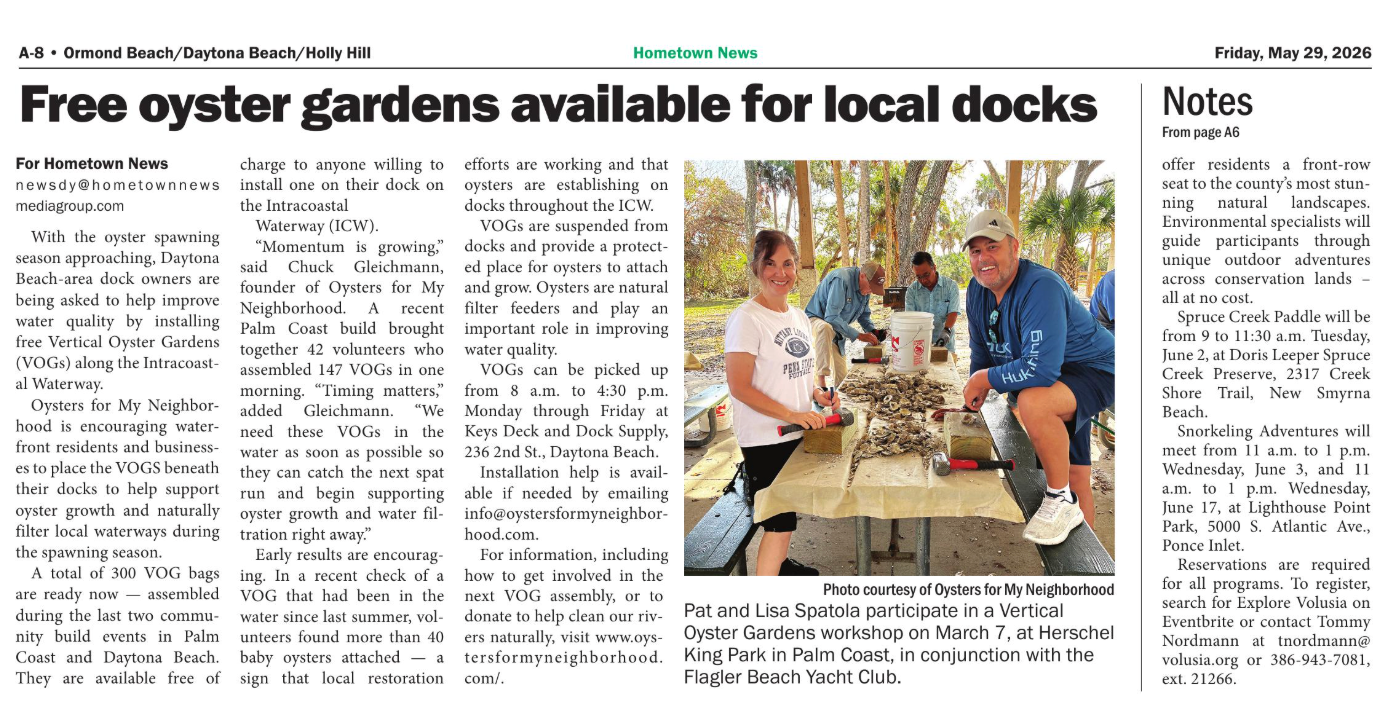
Hometown News
Ormond Beach Observer
Oysters in the News
Florida Bay Was Nearly Depleted of Oysters Until Local Nonprofits Started Dumping Restaurant Scraps in the Ocean
By Colson Thayer, an editorial assistant for PEOPLE covering home, travel, and real estate.
Published on September 23, 2026 05:14PM EDT
PLACING RECYCLED OYSTER SHELLS BACK IN THE OCEAN PROVIDES A HARD SURFACE FOR BABY OYSTERS TO GROW. NOW THEY FILTER UP TO 50 GALLONS OF WATER PER DAY
Florida’s Apalachicola Bay once supplied 90% of the state’s oysters, but faced collapse due to environmental degradation
Officials and nonprofits are recycling restaurant oyster shells to rebuild reefs and support oyster population recovery.
The bay reopened for limited harvesting after years of restoration efforts, with ongoing plans to expand reef restoration It may sound like ocean pollution, but dumping specific restaurant waste into the water is actually saving a fragile coastal habitat.
Florida’s Apalachicola Bay, located along the state’s panhandle, once supplied 90% of Florida’s oysters and about 10% of oysters sold nationally. However, multiple factors, including urbanization, hurricanes, droughts and poor water quality were degrading the environment. According to the Miami Herald, the size of the oyster reef has dropped from 2,000 to less than 100 acres.
In 2013, the U.S. Secretary of Commerce declared the oyster fishery had collapsed. By 2020, the state closed the entire bay for harvesting. However, “A Once-Thriving Coastal Ecosystem Was Nearly Depleted. Then Officials Started Dumping Restaurant Scraps Into the Ocean”
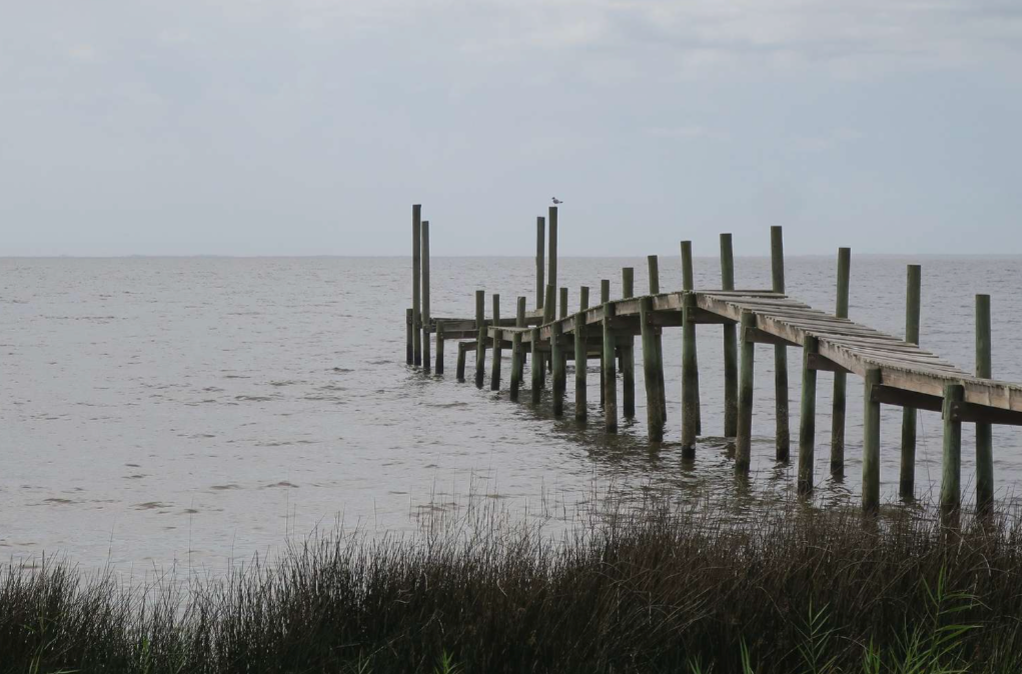
A dock extends into Apalachicola Bay in Florida.
However, multiple creative initiatives have now been implemented to support recovery efforts in the region. Florida’s Fish and Wildlife Conservation (FWC) Commission closed the bay for five years to give reefs time to recover from over-harvesting. The FWC also utilized funds from the National Fish and Wildlife Foundation, and later the Governor and state government, to rebuild, seed, and restore degraded reefs.
State officials have set a long-term goal to restore 2,000 acres of oyster reefs in the bay by 2032, according to the Washington Post.
Additional efforts from area nonprofits are turning to recycled oyster shells to build new reefs where baby oysters can grow. In 2024, the National Oceanic and Atmospheric Administration (NOAA) Office of Habitat Conservation awarded $5 million to recycling efforts across Gulf states like Alabama, Florida, Texas and Louisiana.
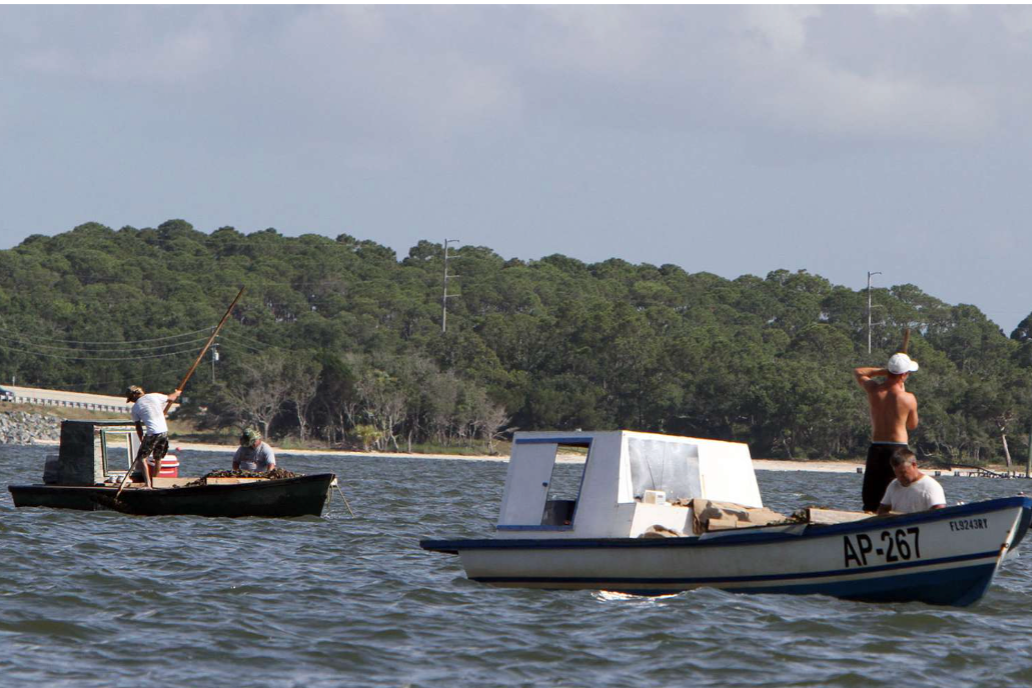
Oyster fisherman harvest in Apalachicola Bay, Florida, in June 2010.
“Currently, the oyster supply chain is linear and extractive with oysters going to restaurants and the majority of those shells going into a landfill,” Michael Biros, restoration programs director for Coalition to Restore Coastal Louisiana, told the department at the time. “We’re working to close the loop so that shells go back in the water where they can grow new oysters and help protect these communities.”
The organizations partner with local restaurants to collect discarded shells and return them where they came from. Placing the shells back in the water offers a hard base for baby oysters to grow on. Single oyster shells can also filter up to 50 gallons of water a day, removing algae and excess nutrients degrading water quality.